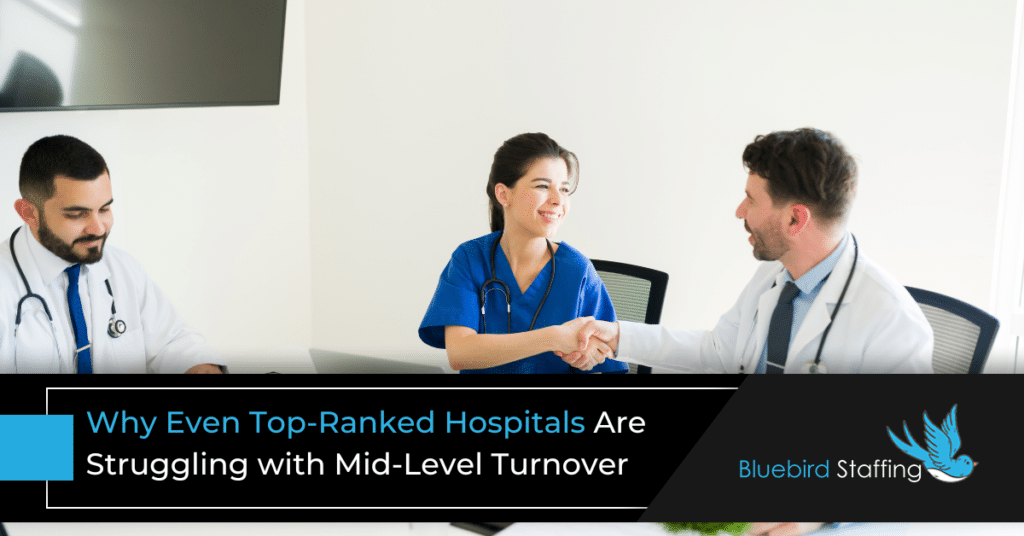
Reputation has long been considered a competitive advantage in healthcare hiring. Top-ranked hospitals often assume that strong branding, advanced facilities, and national recognition will naturally attract and retain talent.
In 2026, that assumption is no longer holding. Even highly respected health systems are seeing increased turnover among mid-level professionals, including experienced nurses and allied staff who play a critical role in care delivery.
This shift is not about prestige. It is about alignment, growth, and day-to-day experience.
Why Reputation Alone Is No Longer a Retention Strategy
While brand recognition may attract candidates, it does not guarantee long-term engagement. Mid-level professionals are evaluating roles based on how they fit into their career trajectory and daily work environment.
When expectations do not match reality, even well-known organizations struggle to retain talent.
Where the gap appears
High-performing professionals entering roles with limited growth visibility. Teams that are operationally strong but lack flexibility. Leadership structures that do not fully support evolving workforce expectations.
What this means for your organization
Attracting talent is only the first step. Retention now depends on how well the role supports ongoing development and sustainability.
Career Stagnation Is Driving Experienced Talent Away
Mid-level professionals are often at a pivotal point in their careers. They are no longer entry-level, but they are not yet in senior leadership roles. Without clear pathways forward, many begin to look elsewhere.
In top-ranked hospitals, where roles can be highly structured, upward mobility may feel limited or unclear.
What to evaluate
Whether career progression is clearly defined within each department. If opportunities exist for skill expansion, specialization, or leadership development. How often career conversations happen between managers and staff.
What this means for your organization
Without visible growth opportunities, experienced professionals may leave even stable environments in search of advancement.
Inflexible Scheduling Is No Longer Sustainable
Work-life balance expectations have shifted significantly, particularly among mid-level clinicians who are managing both professional responsibilities and personal commitments.
Rigid scheduling models that once worked are now contributing to dissatisfaction and burnout.
Where challenges arise
Limited flexibility in shift structures. Difficulty accommodating personal or family needs. Inconsistent scheduling that creates unpredictability.
What this means for your organization
Flexibility is no longer a perk. It is a key factor in retention, especially for experienced professionals who have options.
Leadership Alignment Directly Impacts Retention
Mid-level professionals often have the closest interaction with frontline leadership. Their experience is shaped by communication, support, and how decisions are made at the department level.
Misalignment between leadership priorities and staff expectations can create friction that leads to turnover.
What to consider
Whether leaders are equipped to manage both operational demands and team engagement. How feedback from staff is being collected and acted upon. Whether expectations are clearly communicated and consistently reinforced.
What this means for your organization
Strong leadership is one of the most influential factors in retaining experienced staff. Gaps in this area can quickly lead to disengagement.
The Hidden Cost of Losing Mid-Level Talent
Mid-level professionals bring a combination of experience, efficiency, and institutional knowledge that is difficult to replace. When they leave, the impact extends beyond the vacancy itself.
Turnover at this level affects team stability, onboarding timelines, and overall care continuity.
What is often overlooked
The cost of training new staff to reach the same level of proficiency. The strain placed on remaining team members. The potential impact on patient experience and outcomes.
What this means for your organization
Retention at the mid-level is not just a staffing issue. It is a performance and cost management priority.
What Healthcare Leaders Must Change Moving Forward
Addressing mid-level turnover requires a shift in how organizations approach workforce strategy. It is not about one solution, but about aligning multiple aspects of the employee experience.
Where to focus
Creating clearer career pathways within roles. Introducing more flexible scheduling models where possible. Strengthening leadership training and accountability. Regularly assessing workforce sentiment and acting on feedback.
What this means for your organization
Organizations that adapt to these expectations will be better positioned to retain experienced professionals and maintain stable, high-performing teams.
Build a More Sustainable Workforce Strategy
Mid-level turnover is not a reflection of reputation. It is a reflection of how well an organization supports its people at a critical stage in their careers.
Healthcare leaders who address these challenges directly are better positioned to stabilize teams, reduce avoidable turnover, and maintain consistent care delivery.
At Bluebird Staffing, we work with healthcare organizations to identify where mid-level attrition is happening and why. Our team helps you adjust hiring strategy, improve role alignment, and connect with professionals who are more likely to stay and grow within your system.
If mid-level turnover is impacting your team, it may be time to take a closer look at how your roles, structure, and expectations are aligned. Connect with our team to start that conversation.