Healthcare organizations have spent years focusing on recruitment, retention, and workforce development. Yet one of the most overlooked factors influencing all three may be something much simpler: communication.
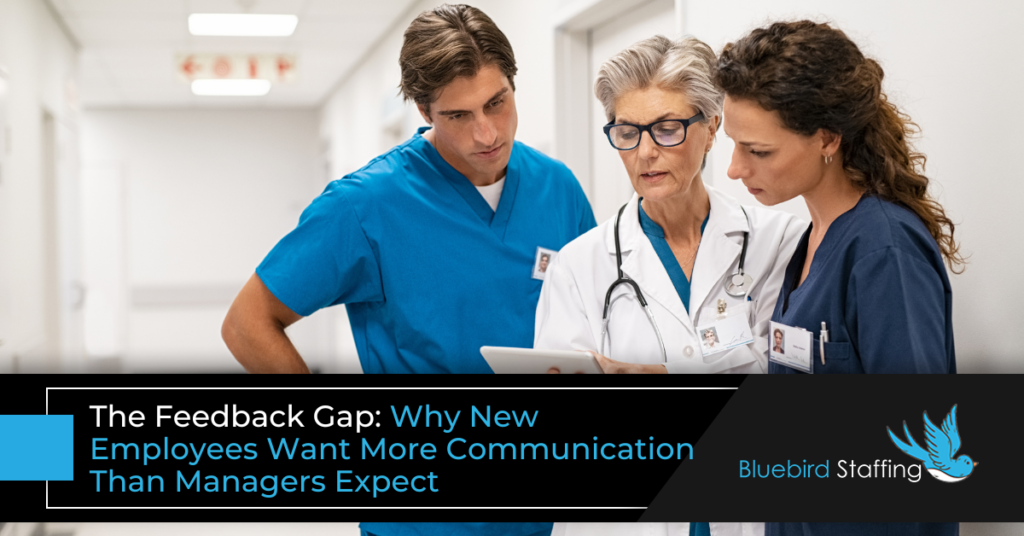
Across healthcare settings, a growing disconnect is emerging between what new employees expect from managers and what managers believe they are providing.
Many leaders assume that if an employee is performing well, minimal intervention is needed. Many newer employees interpret that same silence very differently.
The result is a feedback gap that can impact engagement, confidence, performance, and ultimately retention.
The Definition of Good Management Is Changing
For much of healthcare’s history, management often operated on a principle of independence. Employees were trained, given responsibilities, and expected to perform with limited oversight.
Frequent feedback was often reserved for performance concerns, annual reviews, or major milestones.
Today’s workforce tends to view communication differently.
Many newer healthcare professionals see regular feedback as a normal part of professional development rather than a sign that something is wrong.
What has changed
Employees increasingly expect coaching rather than evaluation. They value ongoing conversations over annual reviews. They often see communication as a sign of support rather than supervision.
What this means for healthcare leaders
Management practices that once felt empowering may now feel disconnected to newer employees.
Silence Is Often Interpreted Differently Than Leaders Intend
One of the most common management assumptions is that no news is good news.
If employees are meeting expectations, many leaders believe they are allowing them the autonomy to succeed.
The challenge is that newer employees often interpret silence differently.
Without regular communication, they may question their performance, wonder whether they are progressing, or feel disconnected from organizational goals.
The manager believes they are showing trust. The employee feels unsupported.
What this means for healthcare leaders
The absence of feedback does not necessarily create independence. In some cases, it creates uncertainty.
Early-Career Professionals Are Looking for Faster Development
Many new healthcare employees enter the workforce with a strong desire to learn and grow.
They are eager to understand what they are doing well, where they need improvement, and how they can continue developing their skills.
Waiting six months or a year for meaningful feedback often feels misaligned with those expectations.
This does not mean employees need constant praise. It means they want greater visibility into their progress.
What this means for healthcare leaders
Regular communication helps employees understand where they stand and what success looks like moving forward.
Feedback Has Become a Retention Issue
Healthcare leaders often think about retention in terms of compensation, scheduling, benefits, and career advancement.
While those factors remain important, communication is increasingly influencing whether employees stay engaged.
Professionals who feel disconnected from leadership are more likely to question their future within an organization.
In contrast, employees who receive consistent feedback often develop stronger relationships with managers and a clearer understanding of their growth opportunities.
What this means for healthcare leaders
Retention is often influenced by everyday interactions long before an employee begins considering other opportunities.
The Strongest Managers Are Becoming Coaches
As workforce expectations evolve, many organizations are seeing a shift in how leadership is defined.
The most effective managers are not simply overseeing tasks and schedules. They are creating environments where employees can learn, improve, and build confidence.
Coaching does not require lengthy meetings or constant intervention.
Often, it is built through small but consistent conversations that help employees stay connected to their work and their development.
What this means for healthcare leaders
Employees are often looking for guidance, not micromanagement. The difference lies in how communication is delivered.
Closing the Gap Before It Impacts Performance
The feedback gap is rarely caused by poor intentions. Most managers believe they are supporting their teams, and most employees want to succeed.
The challenge is that expectations around communication have changed faster than many leadership approaches.
Organizations that recognize this shift have an opportunity to strengthen engagement, improve retention, and accelerate employee development through something relatively simple: more intentional communication.
Building a Workforce That Stays Engaged
As healthcare organizations compete for talent, communication is becoming a more important workforce strategy than many leaders realize.
Employees who understand expectations, receive regular guidance, and feel connected to their managers are often more engaged, more productive, and more likely to stay.
At Bluebird Staffing, we work with healthcare leaders who are navigating changing workforce expectations and evolving employee needs. Understanding what today’s workforce values is essential to building stronger teams and creating environments where professionals can thrive.
If your organization is experiencing retention challenges, engagement concerns, or difficulties integrating newer employees, our team can help you identify workforce trends and talent strategies that support long-term success.