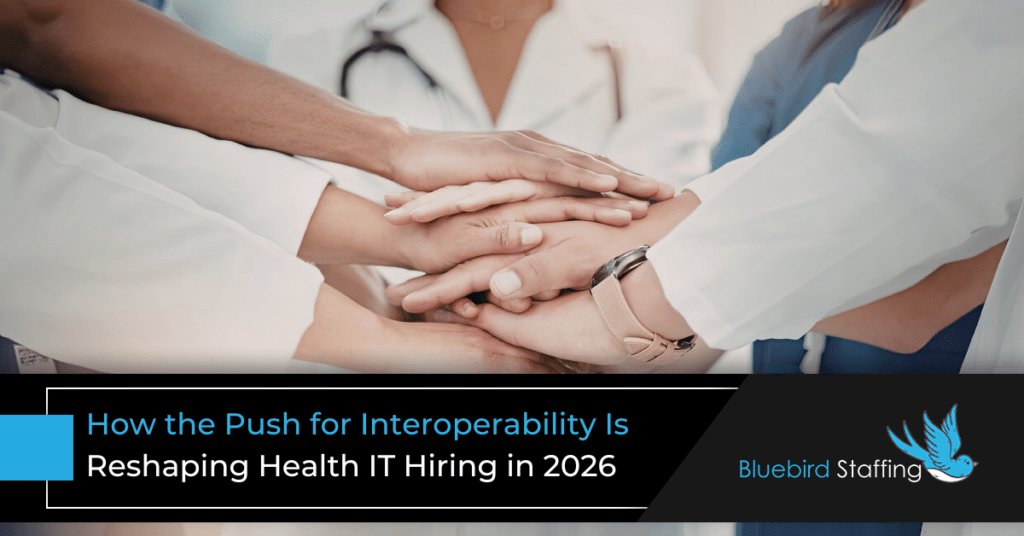
Interoperability is no longer a future goal in healthcare. It is an active priority driven by regulatory pressure, patient expectations, and the need for more coordinated care.
As systems work to connect data across platforms, organizations are facing a new challenge. The talent required to support interoperability is different from traditional healthcare IT roles.
In 2026, hiring leaders must rethink how they define, evaluate, and compete for Health IT talent in an increasingly complex environment.
Why Interoperability Is Changing the Definition of Health IT Talent
Historically, healthcare IT roles were often siloed. Professionals specialized in EHR systems, data reporting, or infrastructure without needing to understand how those systems interact across the broader ecosystem.
Interoperability has changed that. Today’s environment requires professionals who understand how data flows between systems, departments, and external partners.
What is shifting
The demand for professionals who can work across platforms, not just within them. A growing need for individuals who understand both technical systems and clinical workflows. Increased importance of data standards, integration tools, and system connectivity.
What this means for your hiring strategy
Traditional job descriptions may no longer reflect what the role actually requires. Expanding how you define qualifications is essential to attracting the right talent.
The Rise of Cross-Functional Health IT Roles
As interoperability efforts expand, organizations are seeing a rise in hybrid roles that combine technical expertise with operational and clinical understanding.
These roles are critical for ensuring that integrations are not only technically sound but also usable and effective in real-world care settings.
Where demand is increasing
Integration specialists with experience in APIs and data exchange. Clinical informatics professionals who can bridge IT and care delivery. Analysts who can translate data into actionable insights across departments.
What this means for your hiring strategy
The most valuable candidates are often those who do not fit neatly into a single category. Hiring processes must evolve to identify and assess these cross-functional skill sets.
Regulatory Pressure Is Accelerating Hiring Needs
Government initiatives and regulatory frameworks are pushing healthcare organizations to improve data accessibility and exchange. Compliance is no longer optional, and timelines are often aggressive.
This has created urgency around hiring professionals who can support interoperability initiatives effectively.
What to consider
Whether your team has the expertise needed to meet current and upcoming requirements. How delays in hiring could impact compliance timelines. The level of competition for candidates with relevant experience.
What this means for your hiring strategy
Waiting to hire until needs become urgent can put your organization at a disadvantage in an already competitive market.
Why Competition for Talent Is Intensifying
The pool of candidates with true interoperability experience is limited, and demand continues to grow. Organizations across healthcare, technology, and consulting are all competing for the same professionals.
This has shifted the balance of power in the hiring process.
What leading organizations are doing differently
Moving faster through the hiring process to secure top candidates. Offering more flexibility in role structure and work environment. Expanding criteria to include adjacent experience that can translate into interoperability work.
What this means for your hiring strategy
Speed, flexibility, and clarity are becoming key differentiators in attracting and securing talent.
Rethinking How You Evaluate and Position Roles
To compete effectively, hiring leaders must rethink not only who they are hiring but also how they present opportunities.
Candidates in this space are evaluating roles based on impact, growth potential, and alignment with broader digital health initiatives.
What to evaluate
Whether your job descriptions reflect the strategic importance of the role. How clearly you communicate the impact of the position on organizational goals. Whether your hiring process highlights opportunities for growth and innovation.
What this means for your hiring strategy
Well-positioned roles attract stronger candidates and create a more competitive hiring advantage.
Build a Health IT Team That Supports What’s Next
Interoperability is reshaping healthcare in real time, and the talent required to support it is evolving just as quickly.
Organizations that adapt their hiring strategies to reflect these changes will be better positioned to meet regulatory requirements, improve data exchange, and support more connected care delivery.
At Bluebird Staffing, we work with healthcare organizations to identify and secure Health IT talent that aligns with today’s interoperability demands. From cross-functional specialists to leadership roles, we help you build teams that are equipped for where healthcare is heading.
Because in today’s environment, hiring for Health IT is not just about filling roles. It is about building the foundation for connected, data-driven care.