Every healthcare organization has two realities. One lives in the boardroom, where hiring targets, budgets, and compliance goals take priority. The other lives on the floor, where nurses, clinicians, and allied health professionals manage the unpredictable pace of patient care.
When those two worlds stop working together, communication breaks down, hiring slows, and good people leave.
When Priorities Drift Apart
HR and clinical teams share the same mission: to bring in skilled, compassionate people who strengthen care delivery. Yet, the daily demands of their work often pull them in different directions. HR focuses on structure, compliance, and costs. Clinical teams focus on coverage, safety, and outcomes.
When that alignment is lost, hiring becomes reactive. Candidates fall through the cracks, and positions are filled by people who may check every box on paper but fall short in practice. HR believes they are meeting metrics. Clinical leaders feel unheard. The disconnect deepens, and so does turnover.
The Impact of Disconnected Hiring
When HR and clinical teams stop collaborating, the effects are felt throughout the organization.
- Poor fit from the start. Job descriptions written without clinical input often fail to reflect what the role truly requires.
- Slow or inconsistent hiring. When feedback is delayed, strong candidates move on before an offer is made.
- Decreased morale. Clinicians who are left out of hiring decisions feel undervalued, which increases burnout.
- Higher turnover. Employees who join without a clear understanding of the environment rarely stay long.
These challenges add up to something bigger than vacancies. They affect patient care, staff satisfaction, and the reputation of the organization itself.
How Collaboration Strengthens Every Hire
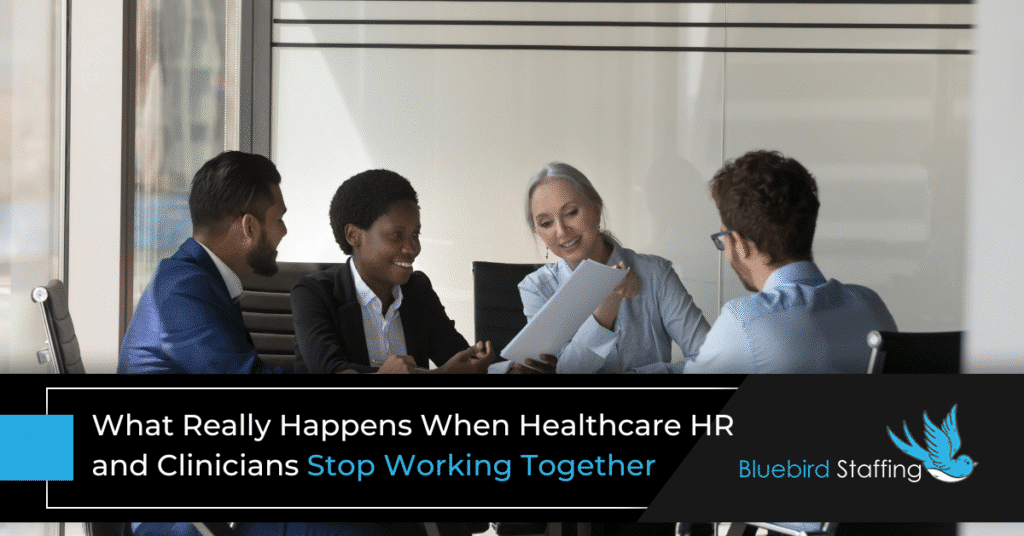
The strongest healthcare organizations treat hiring as a partnership between HR and frontline professionals. Each side brings critical knowledge to the table. HR understands systems and compliance. Clinical teams understand culture, patient needs, and day-to-day realities.
When both are involved from the start, hiring becomes faster, more accurate, and more sustainable. Practical steps include:
- Involving clinical leaders in creating job descriptions.
- Including clinicians in candidate interviews or evaluations.
- Using feedback after every hire to refine future recruiting.
- Building regular communication between HR and department leads to preventing bottlenecks.
A collaborative hiring process gives clinicians a voice and helps HR gain insight into what makes a candidate thrive long-term. The result is not only stronger teams but also greater trust across the organization.
How Bluebird Staffing Bridges the Divide
At Bluebird Staffing, we understand both perspectives. We know the urgency HR faces to meet compliance goals and the challenges clinicians face when teams are stretched thin. We act as the connector, helping hospitals and clinics align their hiring goals with the realities of care delivery.
Our recruiters take the time to listen to both sides. We match candidates who bring skill, empathy, and adaptability to environments where they can succeed. We also help healthcare leaders identify ways to reduce friction between departments, creating a smoother and more effective hiring process.
The Power of Working Together
When HR and clinicians communicate openly, hiring improves at every level. Candidates are chosen more thoughtfully. Teams feel supported. Patient care becomes stronger.
Collaboration is not a luxury in healthcare staffing; it is a necessity. Bluebird Staffing helps you build that partnership so every hire supports both your people and your mission.