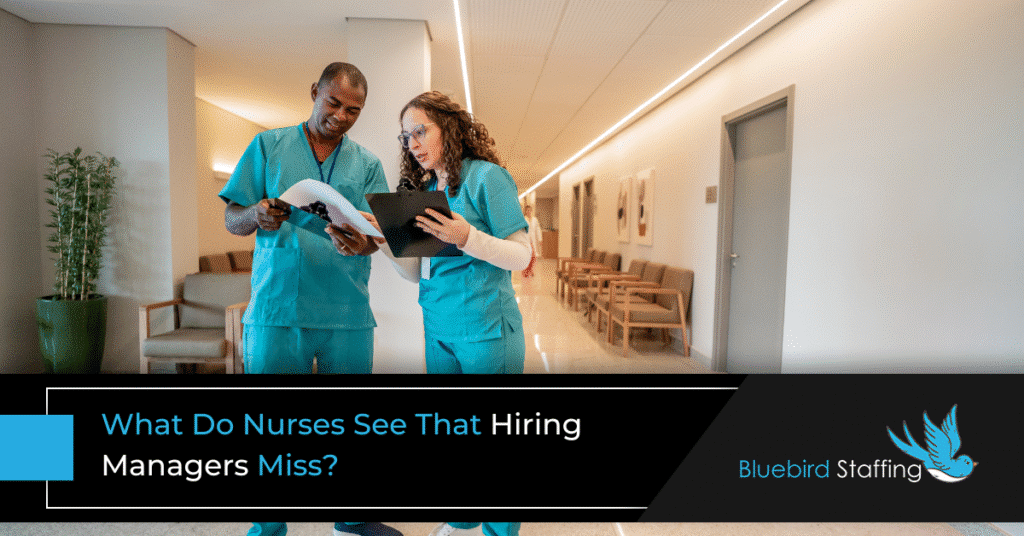
Nurses know when something’s off long before you do. They read the signs that no staffing report captures. They feel the mood shift when one more coworker calls out. They track how often floaters get pulled into critical units. They notice when patient acuity rises, but the number of hands at the bedside does not.
By the time administrators start asking questions, nurses have already sounded the alarm amongst themselves. If you want to protect your team and your outcomes, start listening to what they see.
Hiring managers and HR teams often focus on the visible metrics: fill rates, turnover, and time-to-hire. Those numbers matter. But they don’t always capture the undercurrent of instability your clinical staff feels in real-time.
The Early Warning Signs Nurses Recognize
Staff nurses spot strain quickly. When staffing doesn’t match reality, they adjust silently; at least, for a while. They work through breaks. They trade tasks informally to make the shift manageable. They avoid asking for time off because they don’t want to overburden the team.
But these short-term adaptations come at a cost. Over time, they reduce morale, damage communication, and create friction. Nurses begin to identify which departments consistently underdeliver support. They know who gets trained and who gets left behind. They recognize when burnout is building.
The risk is not just retention. When skilled professionals operate under pressure for too long, safety declines. So does trust. Your most experienced clinicians won’t complain loudly; they’ll just quietly look elsewhere.
What Hiring Managers Often Miss
Most hiring managers don’t ignore these issues intentionally. They’re pulled between budget goals and urgent vacancies. They may rely too heavily on HRIS reports and not enough on real-time feedback.
Some staffing decisions occur without clinical input, which can result in candidates who meet credential requirements but don’t match the unit culture. When new hires leave within weeks, leadership scrambles to fill the vacancies, and the cycle repeats.
To break that cycle, you need a partner who can spot what your internal process overlooks.
How Bluebird Staffing Helps You Catch It Early
Bluebird Staffing works closely with both sides of the workforce equation. We listen to your staff and we listen to ours. Our clinical recruiters understand what good alignment looks like in high-pressure settings.
We don’t just match resumes to job descriptions. We match professionals to environments where they can contribute and thrive. That means asking the right questions about unit culture, team structure, and daily challenges before sending a candidate your way.
We also stay involved after placements begin. If your staff expresses concerns, we catch those signals early and bring them to your attention before they become larger problems.
Close the Gap Between What Nurses Know and What You See
When you work with a staffing partner who understands how healthcare teams function, you gain more than extra hands. You gain insight into what’s really happening on the floor.
Let Bluebird Staffing help you build teams that last. Partner with us to spot risks early, align your hiring strategy, and keep your nurses supported and engaged.